What certifications should suppliers provide for 4G solar cameras?
- 1) How do I correctly size the solar panel and battery for a 4G solar security camera that records 1080p and needs 3 days of autonomy?
- 2) What certifications should suppliers provide for 4G solar cameras to guarantee legal, safe and carrier-ready operation?
- 3) How do I calculate realistic monthly data usage and choose a data plan for continuous vs event-based 4G video streaming?
- 4) What battery chemistry and BMS specs should I insist on for long-life, cold-climate 4G solar cameras?
- 5) Which IP, temperature and mechanical ratings are required for 360-degree PTZ solar security cameras installed in coastal or industrial environments?
- 6) How can I verify latency, stream stability and edge AI performance for a 4G 360 camera before purchase to avoid false alarms and buffering?
- Concluding summary — advantages of 4G solar 360° security camera systems
1) How do I correctly size the solar panel and battery for a 4G solar security camera that records 1080p and needs 3 days of autonomy?
Sizing off-grid power is the single biggest practical pain point. Use a clear energy-budget approach rather than vendor ballpark figures.
Step 1 — Measure or estimate average consumption (W):
- Camera idle/patrol + modem standby: typical 2–5 W.
- Active recording + 4G uplink spikes while streaming 1080p: typical 6–15 W during transmit peaks. For conservative design use a weighted duty-cycle average.
- Example conservative average: assume camera averages 6 W continuous (weighted across idle and transmit bursts).
Step 2 — Convert to daily energy (Wh/day):
- Wh/day = average Watts × 24. Example: 6 W × 24 h = 144 Wh/day.
Step 3 — Add overheads (efficiency, inverter/voltage losses, heating in cold):
- Add 20–30% for MPPT/controller/battery inefficiencies and wiring. Using 25%: 144 Wh × 1.25 = 180 Wh/day.
Step 4 — Battery capacity for desired autonomy:
- Battery Wh required = Wh/day × days of autonomy. For 3 days: 180 Wh × 3 = 540 Wh.
- Convert to Ah at system voltage (12 V typical): Ah = Wh / V = 540 / 12 = 45 Ah.
- Account for usable depth-of-discharge (DoD): LiFePO4 usable DoD ~80% → required capacity = 45 Ah / 0.8 = 56.25 Ah → choose a 60 Ah LiFePO4. Lead-acid would require much larger capacity because usable DoD ~50%.
Step 5 — Solar panel wattage (worst-case design):
- Select conservative average peak sun hours for site (PSH). Example: 4 PSH is typical in many temperate regions; 2–5 varies globally.
- Daily energy needed from panel = Wh/day (after inefficiencies) = 180 Wh.
- Required panel wattage = Wh/day / PSH. Example: 180 / 4 = 45 W. Add safety margin (30–50%) for shading, soiling, aging and winter: 45 × 1.5 = ~68 W. Choose a 100 W panel for robust year-round performance.
Step 6 — Charge controller and MPPT:
- Use MPPT for best yield with variable temperature and partial shading. Ensure controller supports the panel VOC and battery chemistry.
Practical notes:
- 4G uplinks consume highly variable energy during motion-triggered streaming vs continuous streaming. If you use event-based uploads (clips) rather than 24/7 streaming, energy needs can drop dramatically.
- For 360° PTZ continuous patrol or multi-stream high-bitrate recording, budget the higher end of power estimates.
- Always ask suppliers for an energy budget sheet that breaks down typical, peak and worst-case consumption and for real measured data logs from field units in climates similar to yours.
2) What certifications should suppliers provide for 4G solar cameras to guarantee legal, safe and carrier-ready operation?
This is a frequent blind spot for buyers who assume “CE” or “FCC” is enough. For reliable deployment, require a combination of radio, safety, electromagnetic and component certifications:
Cellular and RF / network:
- PTCRB (North America) and/or GCF (Global) test reports — indicate the cellular modem conforms to carrier/industry interoperability. For devices using LTE Cat 4/Cat 1 or NB-IoT/Cat M, request the module’s certification and the final product device approval.
- Carrier approvals / operator certificates — if you plan to deploy on specific networks (e.g., Verizon, AT&T, Vodafone), ask for carrier acceptance letters or proof of successful field testing on those networks.
- EU Radio Equipment Directive (RED) compliance and related test reports for the radio module.
Regional regulatory marks:
- CE (EU), FCC (US), IC (Canada) or other regional approvals appropriate to your target market.
Electromagnetic and safety:
- EMC / EMI test reports (EN 55032/55035 or equivalent) and electrical safety (IEC 62368-1 or local equivalent) for the assembled product.
Battery and transport safety:
- UN38.3 test report for lithium battery transport safety.
- IEC 62133 for rechargeable battery safety (commonly required for Li-ion/LiFePO4 cell and pack safety certification in many markets).
Environmental / materials:
- IP rating test report (IP66/IP67 or higher) for outdoor enclosures. For coastal/industrial sites request corrosion / salt fog test evidence if relevant.
- IEC 61215 / IEC 61730 test reports for the solar panel (durability, thermal cycling, moisture, UV) or UL 61730 / UL 1703 as applicable.
- RoHS and REACH compliance statements for hazardous substances.
Quality management:
- ISO 9001 certificate indicates supplier quality systems.
Third-party labs and documentation:
- Ask for certified test reports issued by accredited labs (e.g., TÜV, SGS, Intertek). Verify report numbers and lab accreditation. Don’t accept forged PDFs — crosscheck with the issuing lab where possible.
How to validate:
- Request detailed test report numbers and the scope of testing (e.g., which model variant was tested).
- Confirm the radio bands and firmware versions used during the cellular tests match the product you intend to purchase.
- For battery packs request BMS schematics/specs, cycle life tests, and thermal run reports where available.
3) How do I calculate realistic monthly data usage and choose a data plan for continuous vs event-based 4G video streaming?
Data planning is often underestimated. Use explicit bitrate math and behavioural profiles.
Step 1 — Know your video settings and streams:
- Main stream 1080p H.264 at 2–4 Mbps is common; 4 Mbps gives better detail. 720p may be 1–2 Mbps.
- Secondary low-resolution event stream (used for notifications) might be 200–500 kbps.
- Consider whether the camera uses continuous upload, scheduled upload, or event-based clip uploads.
Step 2 — Convert bitrate to monthly data:
- Continuous streaming example at 4 Mbps: 4 Mbps × 3600 sec/hr × 24 hr × 30 days = 4 × (3600×24×30) Mb → convert to GB: 4 Mbps × 2,592,000 sec/month = 10,368,000 Mb/month = 1,296,000 MB ≈ 1,265 GB/month (approx 1.3 TB).
- Event-based example: If camera records 30 seconds per motion event, 50 events/day at average 2 Mbps: 2 Mbps × 30 s × 50 = 3,000 Mb/day ≈ 0.375 GB/day ≈ 11.25 GB/month.
Step 3 — Add overhead for metadata, handshakes, retransmissions, and health checks: add 10–20%.
Step 4 — Choose plan class by use-case:
- Continuous live monitoring 24/7 (high bitrate): requires large/unlimited data plans (1 TB+ monthly) — typically expensive. Consider local NVR/edge storage plus low-bandwidth health/event uploads.
- Event-based upload (recommended for solar systems): significantly reduces monthly costs — often <50 GB/month for moderate activity.
- Hybrid: upload low-res stream for monitoring and high-res clips only on-demand or for events.
Additional tips:
- Prefer H.265/HEVC if both camera and cloud/NVR support it — reduces bandwidth by ~30–50% vs H.264, but verify licensing and decoder compatibility with your cloud/NVR.
- Consider intermittent upload strategies: store high-res locally on SD and upload when network conditions are good or on event only.
- Ask the supplier for real-world sample data logs showing average daily usage in comparable deployments.
4) What battery chemistry and BMS specs should I insist on for long-life, cold-climate 4G solar cameras?
Battery selection drives lifetime, maintenance and reliability in cold or hot sites. Don't accept generic “lithium battery” answers.
Preferred chemistry:
- LiFePO4 (LFP) is typically preferred for off-grid solar security because of higher cycle life (2000–4000 cycles), better thermal stability, deeper usable DoD (~80%), and safer thermal behavior vs standard NMC Li-ion.
- NMC cells can offer higher energy density but generally degrade faster and are less tolerant to high temperatures.
BMS requirements:
- Overcharge, over-discharge, short-circuit, over-temperature/under-temperature protection.
- Cell balancing and SOC reporting (State of Charge) — vendor should supply BMS electrical specs and communication protocol (CAN/RS485/TTL) or SOC APIs if integration/monitoring is required.
- Cycle life test reports showing expected capacity retention at specified charge/discharge profiles and temperatures.
Cold-weather performance:
- Li-ion chemistry loses usable capacity and may refuse to charge below certain cell temperatures. LiFePO4 typically supports better low-temperature discharge but charging below 0°C can damage cells unless the BMS has active thermal management.
- Ask for battery operating temperature range and whether the pack has internal heaters or battery heater options if you will deploy below freezing frequently.
Mechanical and safety specs:
- Vibration and shock test results (relevant for telecom towers or mounting on poles).
- IP rating for battery enclosure if installed outdoors (or specify battery housing indoors with separate outdoor enclosure for the electronics).
Procurement checklist:
- Ask for UN38.3 test report (transport), IEC 62133 test reports and sample BMS schematics.
- Review expected cycle life at your intended depth of discharge and temperature profile. Ask suppliers for expected calendar life and warranty terms (years or cycles).
5) Which IP, temperature and mechanical ratings are required for 360-degree PTZ solar security cameras installed in coastal or industrial environments?
Coastal and industrial sites create corrosive and abrasion risks. 360° cameras often include moving parts (PTZ), which are additional failure points.
Minimum ingress and corrosion protection:
- IP66 is a minimum for harsh outdoor use (protection against heavy rain and jets of water). IP67 adds temporary immersion protection. For salt-coast deployments, aim for IP67 or IP68 and proof of salt-fog testing or corrosion-resistant coatings (marine-grade stainless steel or coated aluminum).
- For PTZ housings request PTZ-specific life-cycle tests (X,000 cycles) and a corrosion-resistant gearbox and bearings.
Temperature range and thermal management:
- Verify rated operating temperature range for the complete system (camera electronics, battery and solar panel). Typical desirable range might be -30°C to +60°C for cold and hot climates, but confirm vendor datasheet.
- For hot environments ensure heat dissipation design — cameras with active cooling or heat sinks for the modem and SOC reduce thermal throttling of 4G transmission.
Mechanical robustness:
- Vibration and shock IEC test reports if the camera mounts on poles, wind-exposed sites or vehicles.
- IK impact rating (e.g., IK08) if the camera is at risk of vandalism.
Solar panel and mounting:
- Use corrosion-resistant mounting hardware and sealed junction boxes. Tilt and anti-theft mounts help maintain production and serviceability.
Field serviceability:
- Ask about modular replaceable parts (camera head, solar panel bracket, battery pack) and local spare parts availability.
6) How can I verify latency, stream stability and edge AI performance for a 4G 360 camera before purchase to avoid false alarms and buffering?
Many buyers experience unacceptable latency or false positives in production because they relied on brochure metrics. Validate with specific tests.
Pre-purchase verification steps:
- Ask for an on-site or remote trial unit in a representative network area and climate. Do not accept only lab demo footage.
- Request real-world logs: packet loss, jitter, average RTT (round-trip time), reconnect frequency, and average bitrate across a 24–72 hour period under your expected event profile.
Latency testing:
- Measure end-to-end latency from camera event (motion trigger) to cloud/NVR alert and to live view. For security applications, sub-3-second motion-to-alert is often acceptable; verify your operational requirement.
Stream stability and adaptive bitrate:
- Confirm whether the camera supports adaptive bitrate streaming or dynamic GOP adjustments to maintain stream continuity under fluctuating 4G signal quality.
Edge AI validation (person detection, false-alarm rates):
- Ask the vendor for precision/recall metrics from field tests (not only lab demos). Request test footage and confusion matrix for person/vehicle detection with your expected scene (trees, animals, reflective surfaces).
- Validate False Positive Rate (FPR) and False Negative Rate (FNR) in your environment for a sample period.
Tools and methods:
- Have the vendor provide 7–14 day sample recordings from a comparable deployment. Use those to: measure average data usage, count missed frames, test detection accuracy, and check the frequency of false alarms.
- Run your own acceptance test script: day/night, rain/wind, moving foliage, headlights, animals. Track alerts and correlate to ground truth.
Quality-of-service improvements to request:
- Dual-streaming (low-res continuous + high-res event clip), local SD or NVR buffer with chunked uploads, and configurable thresholds for motion vs human detection.
Concluding summary — advantages of 4G solar 360° security camera systems
4G solar-powered 360° security cameras provide site flexibility (no wired power or Ethernet), rapid deployment and wide-area coverage with panoramic or PTZ capability. When correctly specified and validated—right solar/battery sizing, certified cellular modules (PTCRB/GCF), appropriate battery chemistry and BMS, IP/corrosion ratings, and proven edge AI performance—they significantly reduce installation cost and provide resilient, remote surveillance for off-grid sites. Choosing a supplier who provides detailed energy budgets, accredited certification reports, carrier approvals and field trial data will minimize surprises and lifecycle costs.
For a custom quote and to arrange a field trial unit, contact us at www.innotronik.com or info@innotronik.com. We can provide site-specific solar and data-plan calculations, certification documentation and sample units for evaluation.

Top 10 Best Smart Indoor Camera Manufacturers in China 2026
Wireless Camera vs Wi‑Fi Camera: Key Differences and How to Choose
FAQs
How long has Innotronik been in the security camera industry?
Where is Innotronik located and do you serve global markets?
Does Innotronik have research and development capabilities?
Who are Innotronik's typical customers?
What production facilities and quality systems does Innotronik have?
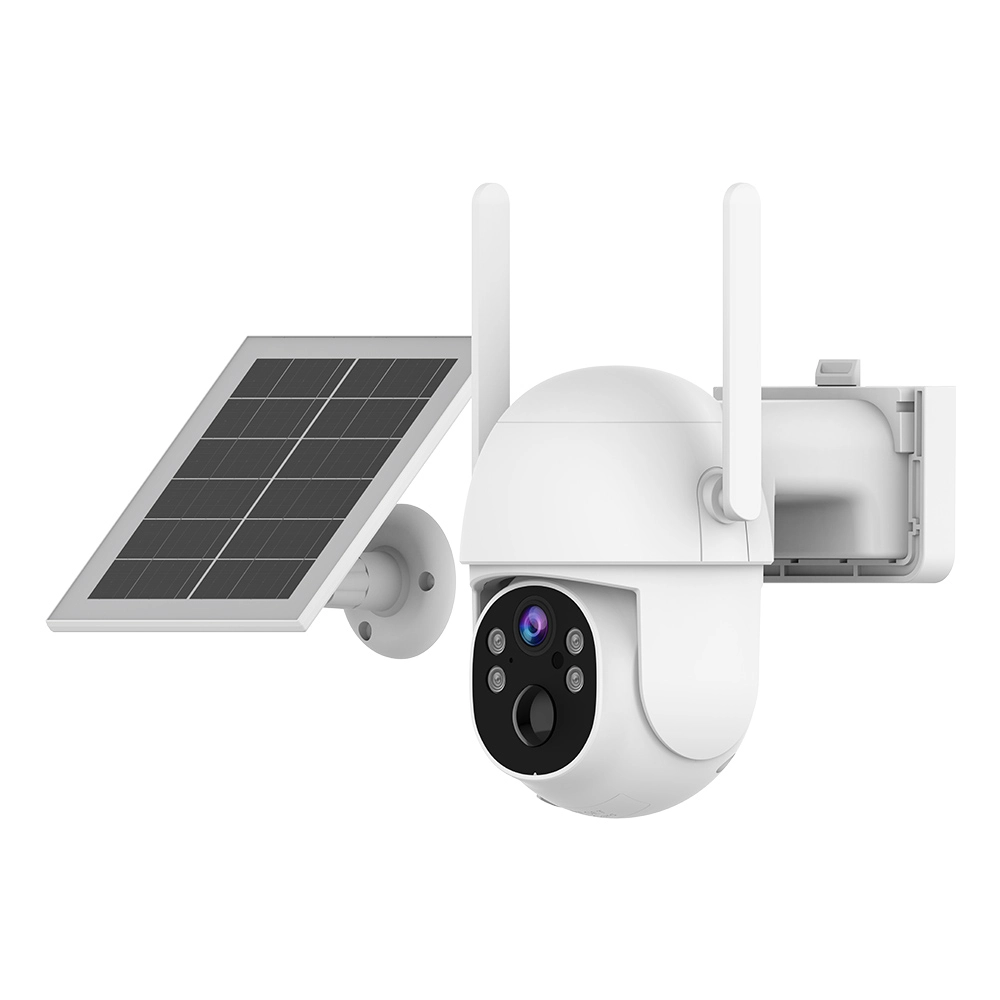
Experience unmatched security with Innotronik’s V-SIM Solar Camera-ITY-PT51-4MP. This 4G solar security camera offers seamless remote monitoring, easy installation, and eco-friendly power, ensuring reliable surveillance anywhere with crystal-clear 4MP video quality.
✦ 0-10m 120° PIR long-range standby trigger for faster startup
✦ 6000 mAh battery with 1-month standby (30 times/day)
✦ Automatic full-color alarm recording
✦ 4MP true pixels and a high-resolution lens for premium imaging
✦ 15m dual-light night vision for clear vision, even in the dark
✦ Supports human motion detection and accurate app alarm push
✦ Two-way real-time voice intercom for communication anytime, anywhere
✦ 128GB TF card storage for recording even without an internet connection; cloud storage for more secure recordings
✦ IP65 waterproof and dustproof for wind and rain resistance
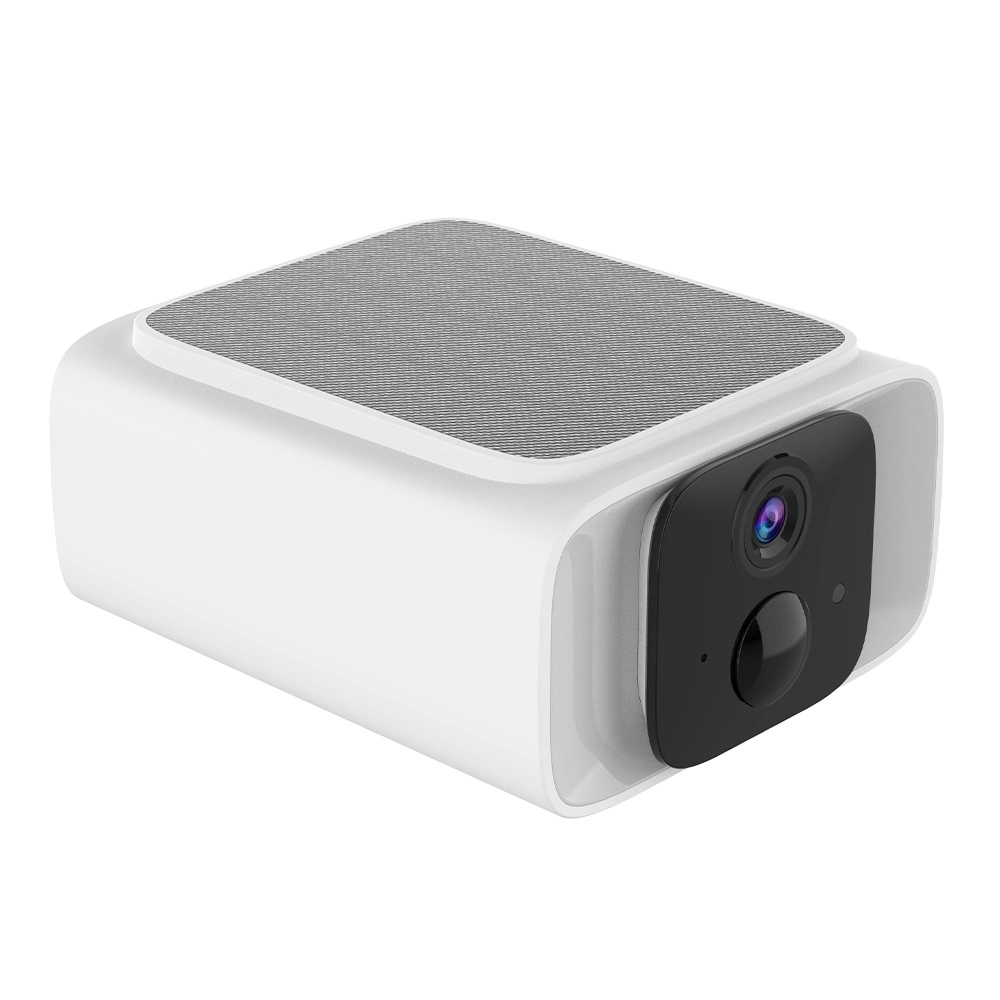
The Innotronik V-SIM Solar Camera-ITY-BC9-5MP is a reliable solar cellular security camera offering 5MP HD video, seamless remote monitoring, and long-lasting solar power. Ideal for remote surveillance, it ensures efficient, eco-friendly security with easy installation and robust connectivity.
✦ 5MP HD video with H.265/H.264 compression
✦Full-color night vision with IR LEDs
✦Two-way audio + siren alarm
✦Solar-powered + 6000 mAh rechargeable battery (3.5 months battery life)
✦Motion detection with mobile alerts
✦Supports Alexa & Google Assistant, Tuya app control
✦2.4G WiFi connectivity
✦Local storage up to 128GB
✦IP66 waterproof for outdoor use
✦Operating temperature: -10°C to 50°C
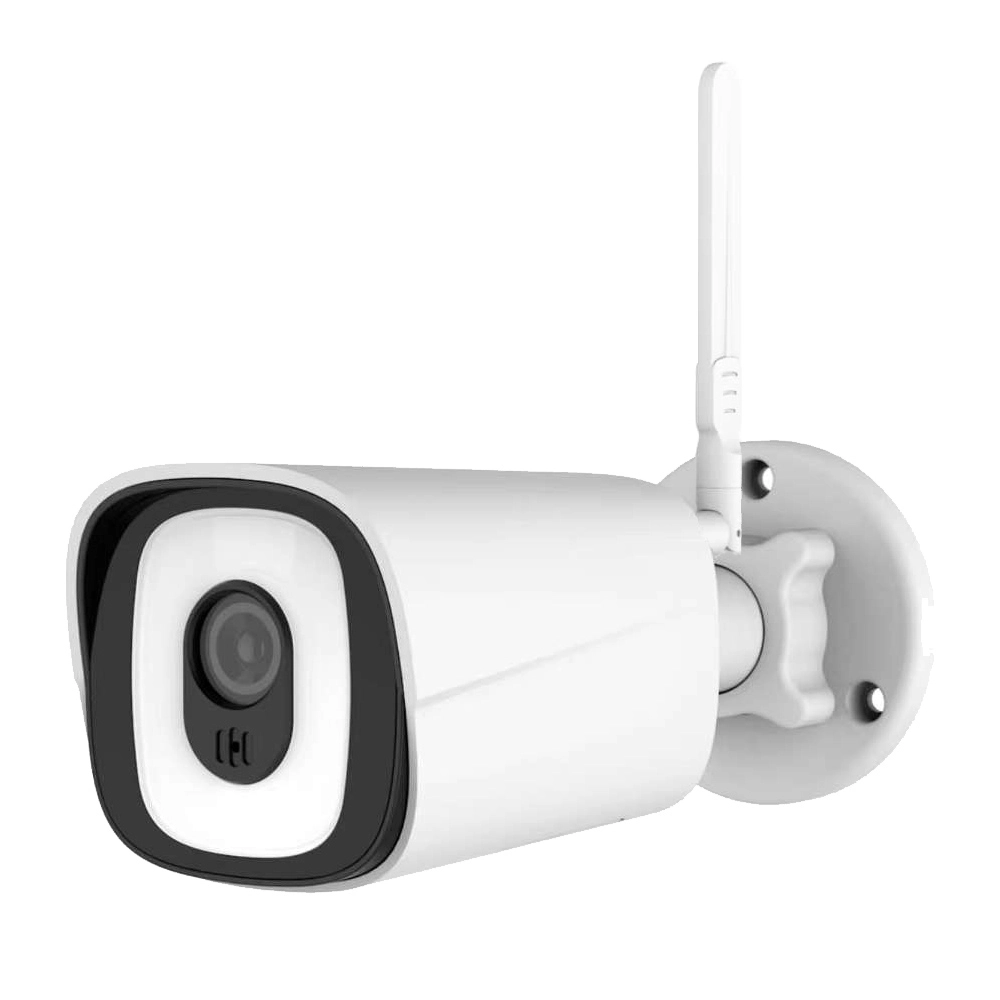
Innotronik’s Wifi Camera Outdoor-ITY-B11 (6MP) delivers high-resolution 6MP video for clear, reliable outdoor surveillance. Easy WiFi setup ensures seamless monitoring, making it ideal for home and business security. Durable design withstands all weather conditions for 24/7 protection.
✦ 6MP ultra HD video
✦ 3 night vision modes (smart/IR/color)
✦Two-way audio
✦ Dual-band WiFi + Bluetooth
✦Human/motion detection with alerts
✦ 24/7 recording (128GB local + cloud)
✦ Tuya Smart app control
✦IP66 Weatherproof (-30°C to +60°C)
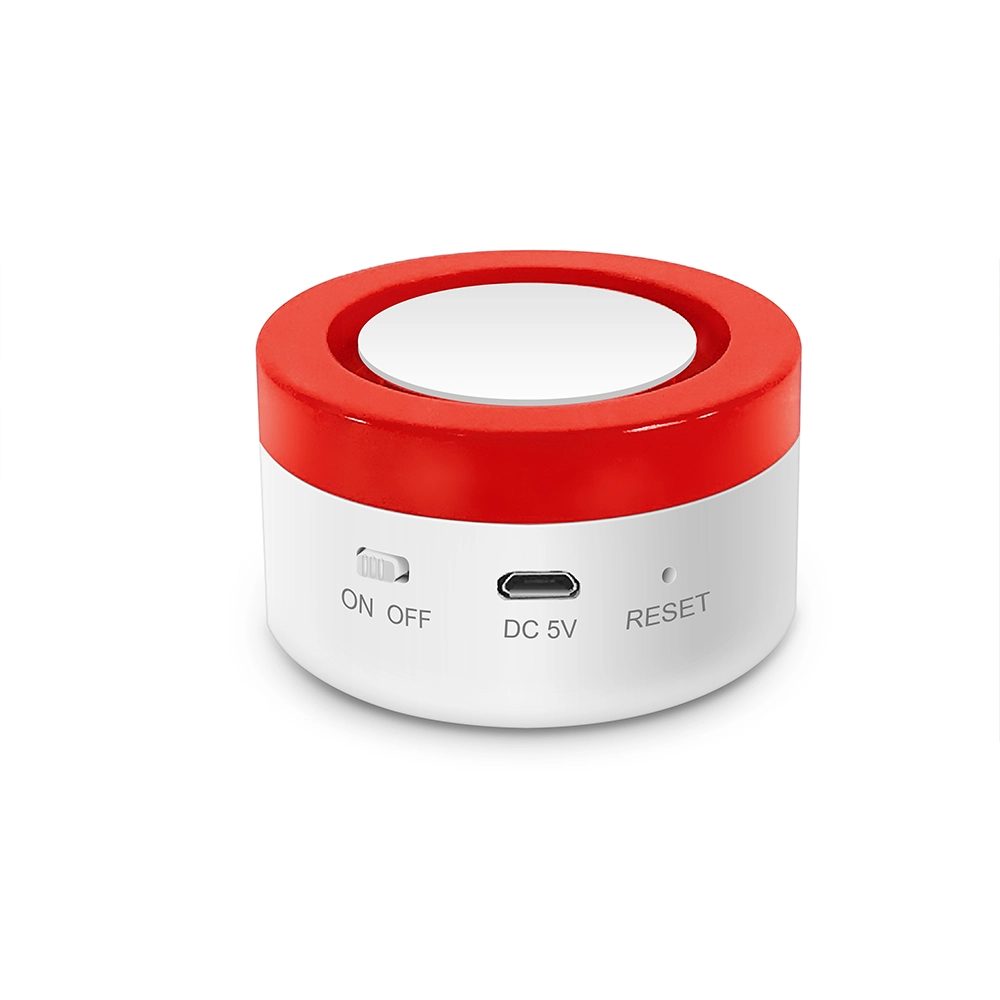
Innotronik's Tuya Smart Alarm-ITY-AK300 offers seamless home security with smart automation. Easily control alerts via the Tuya app for real-time monitoring. Reliable, user-friendly, and perfect for smart homes seeking advanced protection and convenience. Enhance safety with this Tuya smart alarm today.
✦ Based on the TUYA smart home platform, works with most of the TUYA-based smart products.
✦ On-site high-decibel alarm, flashing lights, and other alarm modes.
✦ Home Arm, Away Arm, Disarm
✦ Low-battery detection
✦ System power-off detection.
✦ Tamper detection.
✦ Built-in battery.

Get a Free Quote
Let's Talk.
Reach out to discuss OEM & ODM options, request a quote, or start your project with our expert team.



Aelen Tran
Innotronik Manager
Leave a message
Contact us


First Floor, 99-1 Donghuan Road, Zhucun, Tianhe District, Guangzhou City, Guangdong Province, China.
© 2026 Innotronik. All Rights Reserved.