What are key specs to compare in 4G solar security cameras?
- 1. How do I correctly size the solar panel and battery for a 4G solar security camera that uses 360° coverage and occasional live view?
- 2. Which 4G LTE bands, modem categories and carrier certifications should I verify to ensure a 4G solar security camera will work in my country?
- 3. How much cellular data will a 4G solar security camera use per month with 360° capture — continuous 2K/4K vs event-based (AI) recording?
- 4. Can a 360° 4G solar security camera reliably detect and identify humans at night without external lighting in rural areas?
- 5. How should I evaluate weatherproofing and corrosion resistance for coastal or industrial 360° 4G solar cameras?
- 6. What cybersecurity and privacy features should I check on a 4G solar security camera to avoid remote takeover, data leakage, or unexpected roaming data charges?
- Concluding summary: Advantages of 4G solar 360° security camera systems
1. How do I correctly size the solar panel and battery for a 4G solar security camera that uses 360° coverage and occasional live view?
Sizing a solar panel and battery for a 4G solar security camera requires working from the camera's realistic power profile, accounting for the 4G modem’s bursts, night lighting (IR or spotlight), and any periodic live streaming or pan/tilt actions. Manufacturers often quote optimistic runtimes; build your design from measured or manufacturer-specified current draw.
Step-by-step method:
- Get per-mode power consumption from the datasheet (or measure): idle/standby (mA @ voltage), transmit burst (mA), spotlight/IR LEDs (W), and worst-case continuous streaming (W).
- Convert to average daily watt-hours (Wh): Wh = (mode power in W) × (hours per day in that mode). For a 5V system: W = V × A. For a 12V system, use 12V.
- Add system losses (charge controller, cabling) — use 15–25% overhead.
- Battery capacity (Ah) = required Wh / nominal battery voltage; add depth-of-discharge (DoD) margin (e.g., use 50–80% usable depending on battery chemistry).
- Solar panel sizing: panel W = (required Wh per day) / (peak sun hours × system efficiency). Peak sun hours vary by location (e.g., 3–6 hours/day). Use 0.6–0.75 system efficiency if using MPPT and good wiring.
Practical example (conservative, rounded):
- Assume typical 4G solar 360 camera average draw: standby 0.8 W, average activity (motion + periodic upload) yields 3.2 W daily average when accounting for cellular bursts; night IR/spotlight adds another 1.5 W averaged.
- Total daily average ≈ 5.5 W → 5.5 W × 24 h = 132 Wh/day.
- Add 20% losses → 158 Wh/day.
- For 3 peak sun hours (shady/rural winter): Panel W ≈ 158 / 3 = 52 W → choose a 70–100 W solar panel for reserve (cloudy days, winter).
- Battery: to cover 3 days of autonomy (reasonable for remote installs) → 158 Wh/day × 3 = 474 Wh. For a 12 V battery: Ah = 474 / 12 = 39.5 Ah. Use a 12V 50 Ah lithium battery (or 100 Ah lead-acid with 50% usable DoD) with proper charge controller.
Notes and best practices:
- These are engineering approximations. Many modern solar security cameras are event-driven and sleep most of the time; their daily Wh can be 10–60 Wh instead of 100+ Wh. Always use the camera’s real-world data or measure with an inline USB/ammeter.
- If you expect frequent live view/continuous streaming (e.g., remote PTZ monitoring), increase the system size — streaming is the biggest power/data consumer.
- Use MPPT charge controllers when panel >30 W; keep cable runs short; use marine-grade connectors and tilt the panel to optimize year-round solar gain.
2. Which 4G LTE bands, modem categories and carrier certifications should I verify to ensure a 4G solar security camera will work in my country?
Why this matters: 4G cameras use cellular data modules that only work on supported LTE bands and modem categories (Cat 1, Cat 4, Cat 6, etc.). Buying a global-looking camera that lacks local band support leads to poor signal or no service.
Checklist for compatibility:
- Confirm LTE bands: Check the camera’s hardware band list against your local carrier band allocations. Example critical bands (varies by country): 700/800/850/900/1800/1900/2100/2600 MHz. Download band lists from your carrier or check their website.
- Modem CAT and throughput: For live 360° multi-stream or high-resolution uploads, choose Cat 4 or higher (Cat 4 ~150 Mbps down / 50 Mbps up). For low-data applications, Cat 1 or LTE-M may suffice but many carriers restrict IoT bands.
- Carrier certification and APN: Ensure the vendor supports your carrier’s APN settings, MVNOs, and (if needed) private APN or VPN. For installations on managed networks (e.g., utility sites), require carrier-certified devices or network whitelisting.
- 3G/2G shutdowns: Verify your carrier's legacy network status. Many operators have decommissioned 2G/3G; hence the device must be true 4G/LTE compatible. Ask the vendor for a firmware SKU that matches your region.
- eSIM / physical SIM support: eSIM provides provisioning flexibility; ensure the device supports carrier provisioning methods you plan to use.
Practical tip: Obtain the exact modem model (e.g., Quectel EC25, Telit, Sierra) from the vendor and cross-check its band table against your national operator; request an operator acceptance test if deploying many units.
3. How much cellular data will a 4G solar security camera use per month with 360° capture — continuous 2K/4K vs event-based (AI) recording?
Data depends on resolution, codec (H.264 vs H.265/HEVC), bitrate, and recording mode. Use these working approximations and calculate for your usage pattern.
Common bitrate approximations (use H.265 if available):
- 1080p H.265: 1–3 Mbps (typical event/tracked stream ~1–2 Mbps)
- 2K (1440p) H.265: 2–5 Mbps
- 4K H.265: 6–12 Mbps (depends on scene complexity and motion)
How to convert to monthly data:
- 1 Mbps ≈ 0.45 GB/hour. So:
- 2 Mbps → ~0.9 GB/hour → 21.6 GB/day → ~648 GB/month (continuous 24/7)
- 4 Mbps → ~1.8 GB/hour → 43.2 GB/day → ~1.3 TB/month
Event-based example: If the camera is idle 23 hours and records 1 hour of events per day at 2 Mbps: 0.9 GB/hr × 1 hr/day = 0.9 GB/day → ~27 GB/month.
Savings and recommendations:
- Use H.265/HEVC and smart ROI/bitrate control; H.265 typically reduces bandwidth 30–60% vs H.264 on the same quality.
- Use edge AI (person/vehicle filtering) to minimize false uploads. Edge analytics plus SD-card recording can keep monthly cellular usage to a few GBs if live streaming is rare.
- For continuous live monitoring, budget hundreds of GB to multiple TB per camera per month. For event-only cloud alerts and short clips, budget 5–50 GB/month depending on event frequency.
4. Can a 360° 4G solar security camera reliably detect and identify humans at night without external lighting in rural areas?
Short answer: It depends on sensor type (fisheye vs multi-sensor vs PTZ), low-light sensor quality (starlight CMOS), IR/spotlight design, and analytics.
Key technical points:
- 360° fisheye single-sensor cameras provide panoramic coverage but each pixel covers a wider angle — meaning less pixel density on any target compared with a dedicated zoom/PTZ. For identification (face/license plate) you’ll generally need multi-sensor or PTZ to zoom into a region.
- Night performance depends on sensor sensitivity (measured in lux), lens aperture, and IR/white-light illumination. Many “starlight” cameras can provide recognizable greyscale images down to 0.01 lx (with long exposure) and color night vision with integrated spotlight at <0.5 lx.
- PIR plus radar + edge AI: Combining passive infrared (PIR) sensors and radar greatly reduces false alarms from animals; this preserves battery and data for true human events.
Practical guidance:
- For detection (human present) at reasonable ranges (10–25 m) in rural areas, a 360° camera with PIR and thermal/IR support works well. For identification you’ll want a multi-sensor 4K panoramic array or an integrated PTZ that can be triggered on human detection.
- If the environment is pitch-dark with no ambient light, look for models with powerful spotlight or active illumination (dual IR + warm LED). Spotlight adds power draw; size your solar system accordingly.
- Test on-site: install a trial unit and validate human detection distance at night given your local ambient light and foliage.
5. How should I evaluate weatherproofing and corrosion resistance for coastal or industrial 360° 4G solar cameras?
Salt spray, UV, and industrial pollution accelerate corrosion and seal degradation. IP ratings alone don’t tell the whole story.
What to check:
- IP rating: IP66 is splash- and dust-proof; IP67 adds temporary immersion protection. For prolonged wet exposure or pressure wash areas, IP68 is preferable. For coastal installs choose IP67+.
- Material and coatings: Look for anodized aluminum housings, 316 stainless steel screws/brackets, and UV-stable polycarbonate domes. Specify corrosion-resistant fasteners and marine-grade cable glands.
- Conformal coating or potting on the PCB: this protects electronics from salt ingress and moisture condensation.
- Connector types: Use marine-grade, sealed connectors (e.g., M12 with IP67) and ensure SIM tray seals are rated.
- Operating temperature and de-rating: Verify the camera’s temperature range (typical -20°C to +60°C). In high-heat coastal sun, choose models with passive heat dissipation.
Maintenance plan:
- Schedule periodic freshwater rinses (or sprayed down) to remove salt deposits; inspect seals and reinstallant grease on threads yearly.
- Use UV-stable paint or sacrificial coatings on brackets if possible.
6. What cybersecurity and privacy features should I check on a 4G solar security camera to avoid remote takeover, data leakage, or unexpected roaming data charges?
Security should be as important as power and data considerations. Check for independent security testing, update policies, and modern encryption.
Minimum security requirements:
- Encrypted transports: TLS 1.2+/HTTPS for cloud connections, SRTP for live streams, and HTTPS firmware delivery with signed firmware images (SHA256 signatures).
- Secure boot and signed firmware: prevents unauthorized firmware from running. Check vendor documentation on secure firmware update mechanisms (OTA) and rollback protections.
- Authentication: Strong password enforcement, unique device credentials, and support for 2FA for account access.
- Network features: Private APN or VPN support to avoid exposing device directly to the internet; ability to restrict outbound IPs to vendor cloud endpoints; firewall rules and NAT controls.
- SIM management: SIM locking, APN whitelisting, eSIM with carrier provisioning and ability to block roaming if you want to avoid cross-border data charges.
- Regular vulnerability disclosures and update cadence: vendors should publish security advisories and provide timely patches.
Operational steps:
- Before purchase, request the vendor’s security whitepaper, recent penetration-test report, and firmware update policy.
- Disable unused services (Telnet, FTP) and change default credentials on first boot. Use private APNs or VPN tunnels for critical sites.
Concluding summary: Advantages of 4G solar 360° security camera systems
4G solar 360° camera systems combine off-grid deployment flexibility with wide-area coverage. The main advantages are: true untethered installation (no mains power), remote connectivity over LTE (eliminating local network complexity), panoramic monitoring that reduces the number of cameras needed, and modern edge AI that minimizes data usage and false alerts. When sized correctly (panel + battery), matched to local LTE bands, and procured with verified cybersecurity measures and corrosion-resistant hardware, they provide reliable, low-maintenance surveillance for remote, rural, and coastal sites.
For an installation quote, hardware region SKU checks, or a solar/battery sizing worksheet tailored to your exact camera model and location, contact us at tit3nhoq.gooeyun.com or email info@innotronik.com. Our engineers can provide a deployment-ready bill of materials and carrier-compatibility checklist.
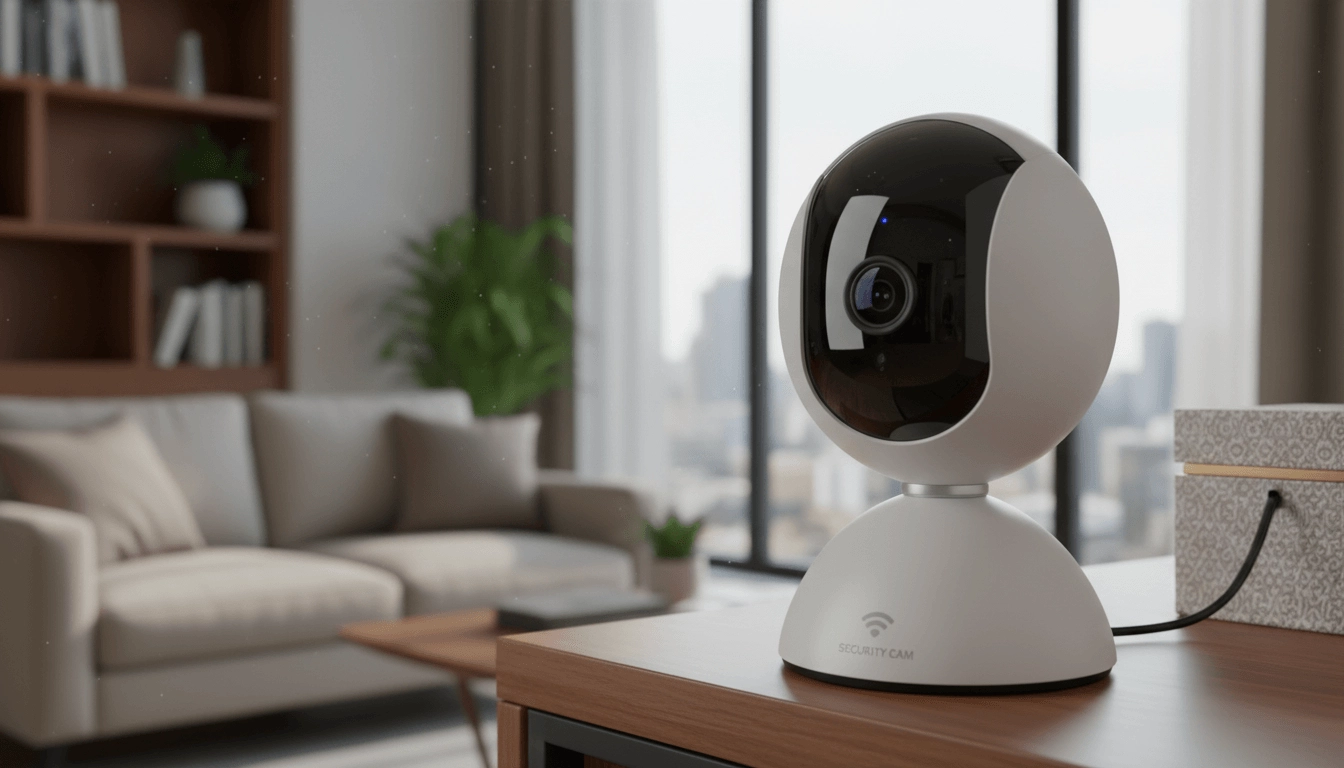
Top 10 Best Smart Indoor Camera Manufacturers in China 2026
FAQs
Who are Innotronik's typical customers?
Where is Innotronik located and do you serve global markets?
Does Innotronik have research and development capabilities?
What is Innotronik's core business?
What production facilities and quality systems does Innotronik have?
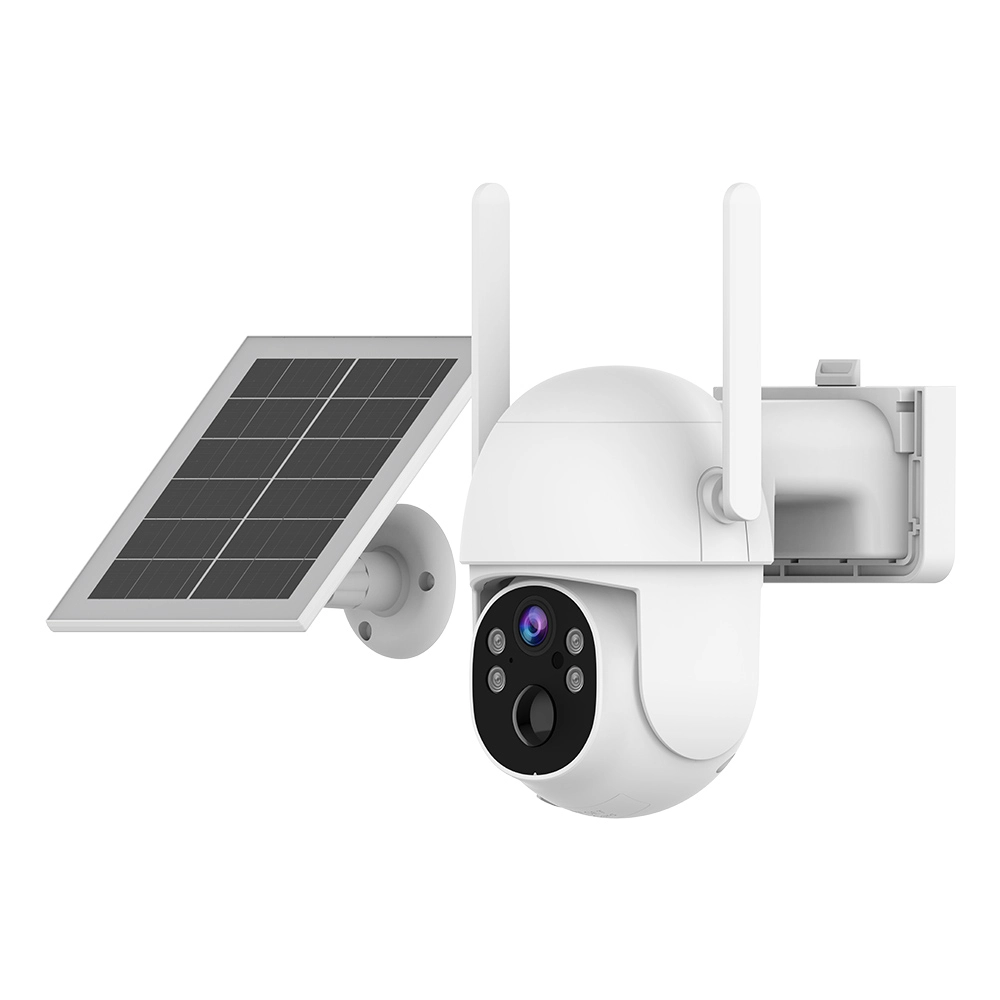
Experience unmatched security with Innotronik’s V-SIM Solar Camera-ITY-PT51-4MP. This 4G solar security camera offers seamless remote monitoring, easy installation, and eco-friendly power, ensuring reliable surveillance anywhere with crystal-clear 4MP video quality.
✦ 0-10m 120° PIR long-range standby trigger for faster startup
✦ 6000 mAh battery with 1-month standby (30 times/day)
✦ Automatic full-color alarm recording
✦ 4MP true pixels and a high-resolution lens for premium imaging
✦ 15m dual-light night vision for clear vision, even in the dark
✦ Supports human motion detection and accurate app alarm push
✦ Two-way real-time voice intercom for communication anytime, anywhere
✦ 128GB TF card storage for recording even without an internet connection; cloud storage for more secure recordings
✦ IP65 waterproof and dustproof for wind and rain resistance
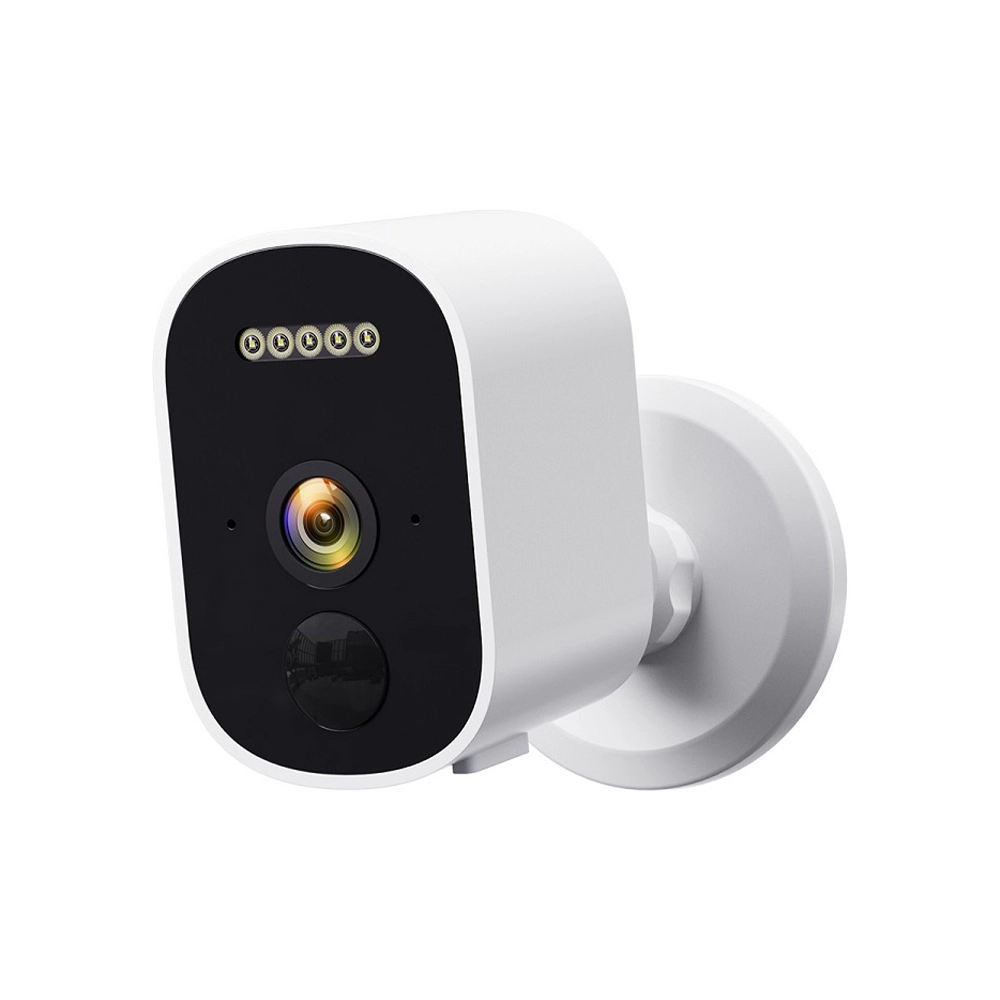
The Innotronik Wifi Solar Camera-ICH-BC11(3MP) delivers reliable, high-quality surveillance with 3MP clarity. Powered by solar energy, this solar wifi camera ensures eco-friendly, wireless security, perfect for remote monitoring without wiring hassles. Ideal for smart, sustainable surveillance solutions.
✦ No Power Wiring Required: The device is battery-powered; simply recharge when depleted for continued use.
✦ No Cabling Required: Utilizes WIFI for data transmission.
✦ Remote Viewing: Built-in WIFI; once connected to the network, scan a QR code with your mobile phone for remote viewing.
✦ Human Detection: Immediately begins recording upon detecting human presence.
✦ Privacy Protection: Local storage ensures data does not leak.
✦ Dual-Light Source Design: At night, you can choose to activate infrared lights or white lights.
✦ Simple Installation: Comes with a magnetic bracket, allowing attachment to iron surfaces like refrigerators, air conditioners, iron doors, etc.
✦ Portable: Compact size and lightweight, total weight approximately 300 g.
✦ Includes Battery: The standard configuration includes a battery with a total capacity of 4000 mAh.
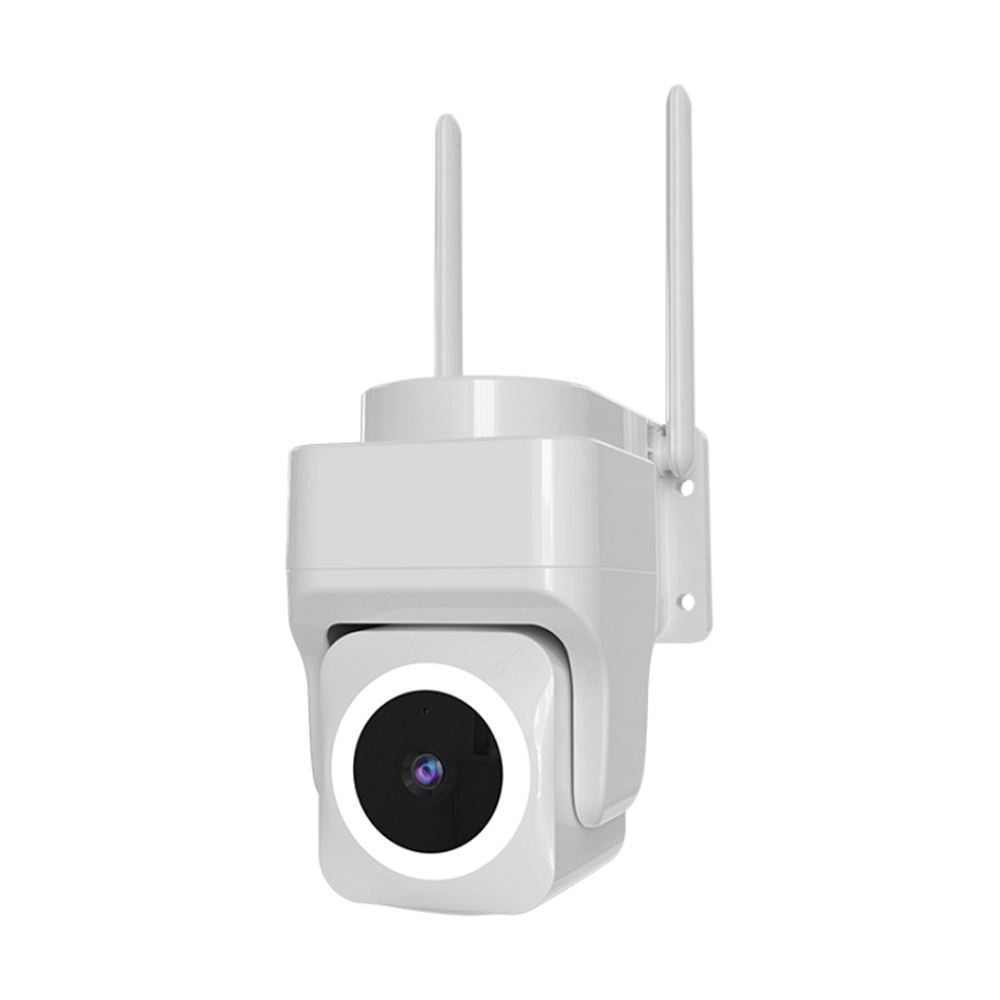
The Innotronik Wifi Camera Outdoor-ITY-PT29 (3MP) delivers sharp 3MP video for reliable outdoor security. Designed for easy wifi connectivity, this outdoor wifi security camera ensures real-time monitoring and protection in all weather conditions. Ideal for home and business security.
The Innotronik Wifi Camera Outdoor-ITY-PT29 (3MP) offers high-quality 3MP resolution with solar-powered wifi capability, ensuring reliable, eco-friendly surveillance. Ideal for outdoor security, this camera combines advanced wireless tech and solar energy for seamless monitoring anytime, anywhere.
✦ 3MP HD Imaging: High-quality lens delivering 2304 × 1296 resolution clarity.
✦ Wide-Angle View: 106.6° diagonal field of view for broader coverage.
✦ Dual Night Vision: 10 m infrared and full-color modes for 24/7 visibility.
✦ Smart App Alerts: Instant motion detection with real-time push notifications.
✦ Two-Way Audio: Built-in microphone and speaker for seamless remote intercom.
✦ Multi-View Sync: Monitor multiple cameras on one screen simultaneously.
✦ Secure Storage: Supports TF card for offline recording and secure cloud storage.
✦ Flexible Setup: Easy installation on countertops, walls, or ceilings.
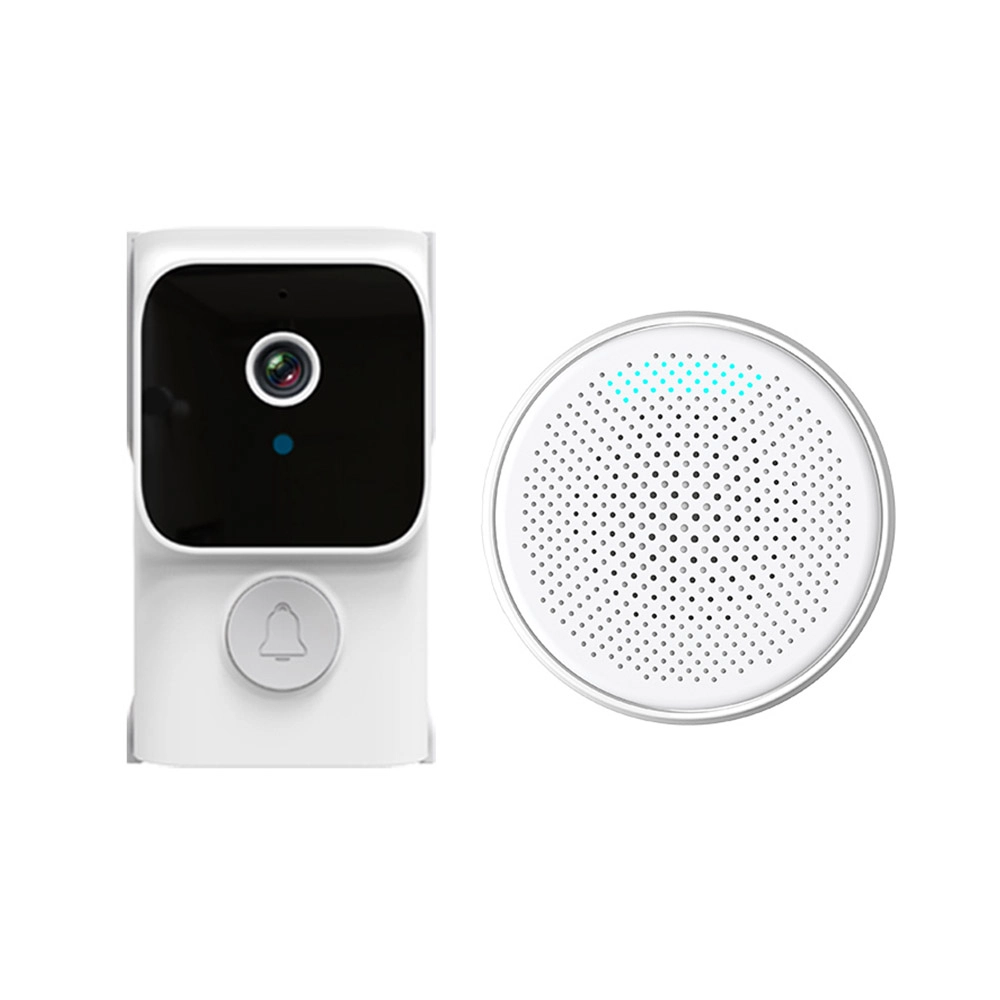
Innotronik’s Video Doorbell Camera ITY-RB8-30W pixel features a rechargeable battery security camera for seamless, cordless monitoring. Enhance your home security with clear video, easy installation, and reliable performance—perfect for smart, modern protection.
-
✦ Security camera with rechargeable battery for flexible, wireless installation
-
✦ 480P 30W pixel with 75° viewing angle
-
✦ Day and night mode automatic switching to ensure a crystal-clear view
-
✦ Built-in microphone and speaker with high-quality real-time two-way audio and noise cancellation
-
✦ IP55 waterproof design to ensure non-stop operation in various weather conditions
-
✦ Monitor your home remotely via a 2.4G WiFi connection
-
✦ Instant phone notification when someone rings the doorbell
-
✦ Supports cloud storage
-
✦ Wireless door chime rings to alert you when the doorbell is pressed
-
✦ Tuya Smart App, compatible with iOS and Android smartphones

Get a Free Quote
Let's Talk.
Reach out to discuss OEM & ODM options, request a quote, or start your project with our expert team.



Aelen Tran
Innotronik Manager
Leave a message
Contact us


First Floor 99-1 Donghuan Road, Zhucun Tianhe District Guangzhou City Guangdong Province
© 2026 Innotronik. All Rights Reserved.