How to verify IP and weatherproof ratings on solar security cameras?
- 1. How do I correctly size the solar panel and battery for a 360 PTZ 4G solar security camera to survive winter and several cloudy days?
- 2. How can I verify a manufacturer's IP67 or IP68 claim for a 4G solar camera before purchase—especially for coastal installations?
- 3. Which 4G/LTE bands, carrier approvals, and antenna specifications should I confirm to prevent field connectivity failures on remote sites?
- 4. How do I test and confirm weatherproofing details like cable glands, vent membranes, and corrosion protection on a sample 4G solar security camera?
- 5. Which battery chemistry and BMS specifications should I insist on for long-life off-grid 4G solar cameras used in extreme temperatures?
- 6. How do I verify that published IP and IK ratings reflect real-world impact, immersion, and salt-spray resistance for a 360 security camera used on poles?
- Concluding summary: Advantages of 4G solar security camera and 360 PTZ systems
6 Detailed Buyer Questions: 4G Solar Security Camera and How to Verify IP & Weatherproof Ratings
Buying a 4G solar security camera or a 360 PTZ solar-powered security camera for remote sites raises specific technical risks beginners rarely see covered in depth online. Below are six long-tail, pain-point-oriented questions with actionable, standards-based answers you can use when evaluating manufacturers, test reports, and on-site samples.
1. How do I correctly size the solar panel and battery for a 360 PTZ 4G solar security camera to survive winter and several cloudy days?
Why this matters: 360 PTZ cameras (pan-tilt-zoom) often have higher and variable power draw than fixed cameras — motors, heaters, infrared illuminators, and 4G modems add peaks. Under-sizing the solar array or battery results in brownouts, missed recordings, and accelerated battery degradation.
Actionable steps and formula (industry-proof):
- Obtain measured power figures from the camera datasheet: idle power (W), average active power (W), peak power in motor/heater use (W), and heater draw at low temps. If not available, request a current-vs-state log from the vendor (A recorded over 24–72 hrs under representative use).
- Calculate daily energy need: Daily Wh = average power (W) × 24 h. Add estimated extra for PTZ activity: Extra Wh = (peak motor power − average power) × expected movement hours per day.
- Battery sizing: Required usable Wh = Daily Wh × days of autonomy (e.g., 3–5 cloudy days). Choose battery capacity (Wh) = Required usable Wh / system efficiency (typically 0.85 for charge/discharge/inverter losses). If battery spec uses Ah, convert: Ah = Wh / nominal voltage (12V or 24V).
- Respect depth of discharge (DoD): For lead-acid assume 50% usable; for LiFePO4 you can use 80–90% DoD. So choose nominal capacity = Ah / usable fraction.
- Solar array sizing: Peak-sun-hours (PSH) at site drives panel sizing. Panel Watt = Daily Wh / (PSH × derating factor). Use derating 0.65–0.75 to account for temperature, soiling, and controller losses.
Practical example (conservative): Suppose average draw = 10 W (camera + modem + small idle PTZ activity), expected extra motor use = 5 W for 1 hour/day, days autonomy = 3, system voltage = 12 V, PSH = 3 (winter/low sun site), derating = 0.7, desired DoD = 80% (LiFePO4).
- Daily Wh = (10 W × 24 h) + (5 W × 1 h) = 240 + 5 = 245 Wh/day
- Usable for 3 days = 245 × 3 = 735 Wh
- Nominal battery Wh = 735 / 0.85 = 865 Wh → At 12 V → Ah = 865 / 12 ≈ 72 Ah
- Because LiFePO4 usable fraction ≈ 80% → choose nominal battery ≈ 72 / 0.8 = 90 Ah (12 V)
- Solar panel sizing: Panel W = 245 / (3 × 0.7) ≈ 117 W → choose a practical installed panel of 150–200 W to allow for seasonal drop and shading.
Checklist to demand from vendors: 24–72 hr measured current logs, heater current at -20°C if applicable, recommended panel wattage for your latitude/PSH, full charge/discharge curves, and BMS discharge limits.
2. How can I verify a manufacturer's IP67 or IP68 claim for a 4G solar camera before purchase—especially for coastal installations?
Why this matters: Manufacturers sometimes publish generic IP ratings without supporting test evidence. Coastal environments add salt-spray corrosion (ASTM B117) that will defeat seals even if an IP immersion test passed.
What “IP67/IP68” actually means (brief): IP is per IEC 60529 — first digit = solid ingress (6 = dust-tight); second digit = liquid ingress (7 = immersion up to 1 m for 30 min typical; 8 = immersion beyond 1 m under manufacturer-specified depth/time). The manufacturer should specify the actual test conditions for IP68 (depth/time).
Verification steps:
- Request the full third-party test report—look for an accredited test lab (TÜV, SGS, Intertek). A certificate number and report date should be present. If they provide only a declaration of conformity without a test lab, treat it as weak evidence.
- For IP68 ask for exact immersion depth/time used in testing. If unspecified, demand clarity—real protective designs vary widely: IP68 to 2 m/24 h is different than IP68 to 5 m/72 h.
- For coastal use request salt-fog (salt-spray) testing per ASTM B117 or ISO 9227 and corrosion results. IP rating alone doesn’t address corrosion resistance of housings, screws, and connectors.
- Inspect the test lab accreditation: ILAC-MRA or national accreditation for the issuing lab increases trustworthiness.
- Ask for model-specific test reports: do not accept generic reports for “similar enclosures.”
On-site sample verification (if buying multiple units): perform a destructive inspection of a returned sample after a season — check O-rings, silicone gaskets, cable-gland seals, and evidence of water ingress in connector cavities. For coastal installations, require stainless fasteners (316) or appropriate coatings and a documented salt-spray pass time (e.g., 500–1,000 hours depending on service life requirement).
3. Which 4G/LTE bands, carrier approvals, and antenna specifications should I confirm to prevent field connectivity failures on remote sites?
Why this matters: Many devices list “4G” generically. In practice, mismatch of LTE bands, lack of carrier certification, weak modem category, or poor antenna design causes intermittent or no service in remote locations.
Checklist of specifics to verify with the vendor:
- Supported LTE bands: Get the exact band list (e.g., B2/B4/B12/B13/B20/B28/B66). Match those against the mobile network operator (MNO) bands available at your site (check operator coverage maps or request a site survey with a field LTE scanner).
- Modem LTE category: Cat 4, Cat 6, Cat 12, Cat M1 (NB-IoT/EC-GSM for low bandwidth devices). For video streaming choose at least Cat 4/Cat 6. Cat M1/NB-IoT does not support high-bitrate video.
- Carrier certification / IMEI approval: Ask whether the device or modem is certified/approved on your intended carrier (some carriers require device testing/IMEI whitelisting). Request proof or a statement of carrier compatibility.
- Antenna specs: Antenna gain (dBi), whether the antenna is internal or external, polarization, and whether it supports MIMO (2×2 MIMO improves throughput and reliability). For weak-signal sites insist on external detachable antennas and documented antenna VSWR and gain.
- SIM form factor & provisioning: physical SIM vs eSIM, SIM tray IP sealing quality, and whether the vendor supports remote APN configuration and failsafe reconnection logic in the firmware.
- Data usage & compression: Confirm H.265 hardware encoding, edge AI motion filtering, and bitrate controls to reduce data caps and monthly cost on cellular plans.
Field test: Before full deployment, run a pilot: place the camera at the intended pole location with expected antenna orientation and log RSRP/RSRQ and average throughput over 48–72 hours. If RSRP is worse than -110 dBm and RSRQ is poor, request an external high-gain antenna or alternate carrier SIM.
4. How do I test and confirm weatherproofing details like cable glands, vent membranes, and corrosion protection on a sample 4G solar security camera?
Why this matters: Weatherproofing is more than an IP number. Real-world failure modes include degraded cable gland seals, blocked pressure-equalization vents, micro-cracks from UV exposure, and galvanic corrosion in mixed-metal fittings.
Practical, low-cost tests and inspection checklist you can use on a sample unit:
- Visual and dimensional inspection: Verify cable gland type (IP-rated PG or M series), presence of silicone O-rings, and whether gland threads are covered internally (to avoid wicking). Check for a Gore-type pressure-equalization vent—this prevents seal blowouts due to differential pressure and is common on high-quality solar camera housings.
- Spray/jet trial (field): If supplier permits, do a short water-jet test (IP66 style) directed at seals for 1–2 minutes and then open the unit to inspect for droplets. Note: don't do full immersion unless the camera is rated for it and manufacturer permits sample testing.
- Condensation check: Perform a 24–48 hour temperature cycle (hot day/cold night) and open the enclosure to check for internal condensation; look for conformal coating on electronics and presence of desiccant packets or a drain path.
- Salt-fog walkthrough: For coastal installations, insist on salt-spray test reports (ASTM B117) and inspect fasteners—are they 316 stainless steel or plated for corrosion resistance? If you can't run a full salt-fog test, ask for pass/fail photos from prior deployments in similar environments.
- Cable and connector checks: Confirm connector sealing IP rating, whether connectors use silicone boots, and that external cable paths use UV-resistant jackets. Micro-USB/USB-C/SD card doors should have robust double gaskets.
Ask the manufacturer to provide assembly photos of production units and to include serial-numbered test logs—this helps trace quality control and discover whether environmental tests were for pre-production prototypes only.
5. Which battery chemistry and BMS specifications should I insist on for long-life off-grid 4G solar cameras used in extreme temperatures?
Why this matters: Battery life and reliability drive whole-system uptime. Cheap lead-acid or poorly managed lithium packs will fail faster in hot deserts or sub-zero winters. The right chemistry and BMS dramatically increase cycle life and safety.
Recommendations and specs to require:
- Chemistry: Prefer LiFePO4 for off-grid solar security cameras—it offers better cycle life (2,000+ cycles typical), safer thermal stability, and broader usable DoD than traditional lead-acid. In cold climates LiFePO4 still needs heater or battery management adjustments below -20°C.
- BMS features: Per-cell over/under voltage protection, cell balancing, overcurrent protection, temperature sensors on the battery pack, and documented charge/discharge curves. Request the BMS cut-off voltages and thermal cutoffs.
- Operating temperature range: Confirm both operating and storage ranges. For example, a BMS rated to -20°C to +60°C and a battery pack with integrated heater (or specification that camera uses heater only when grid power present) is desirable for extreme sites.
- Cycle life and warranty: Ask for cycle-life curves at your intended DoD and temperature. Prefer vendors who publish cycle life at 80% DoD and +25°C and provide a 3–5 year warranty for off-grid use.
- Maintenance and replaceability: Confirm the battery is a replaceable module with a documented replacement procedure and that the vendor supplies capacity/health monitoring via the camera management interface or an API (state of charge, cycles, cell voltages).
Note on cold weather: Lithium chemistries suffer reduced capacity below 0°C. Either design the system with enough extra capacity, include an enclosure heater (with its own energy budget), or choose an application-specific battery pack rated for low temperatures.
6. How do I verify that published IP and IK ratings reflect real-world impact, immersion, and salt-spray resistance for a 360 security camera used on poles?
Why this matters: Pole-mounted 360 cameras face mechanical impact (birds, vandalism), immersion risk from maintenance incidents or storms, and corrosion from coastal spray. IK and IP ratings measure different hazards and both matter.
Understanding the standards and verification steps:
- IK rating (IEC 62262): IK ratings (e.g., IK08, IK10) measure mechanical impact energy resistance. IK10 means resistance to 20 J impact. Ask for IK test reports with model numbers and test fixture photos. If vandal resistance is critical, prefer IK10 housings and stainless or armored housings for exposed enclosures.
- IP testing specifics (IEC 60529): Confirm both digits and the concrete test conditions (immersion depth/time for IP67/IP68). For pole-mounted units, IP66 (powerful water jets) and IP67 are common; IP68 is better if the unit might be submerged in storms or for washdown scenarios.
- Salt-spray (ASTM B117) and corrosion: Coastal mounting requires documented exposure hours and material lists. Request pass/fail durations (e.g., 500 h, 1,000 h). Also ask for any protective coatings or anodization specs for aluminum housings and fastener grades (316 SS recommended near saltwater).
- Field verification approach: Install one or two sample units on-site for a season and perform scheduled inspections: check for deformations from impacts, seal degradation, and corrosion. Keep a log of events and return samples for lab teardown if failures occur.
- Warranty & MTBF: Ask for Mean Time Between Failures (MTBF) when available and a weather/damage warranty or service-level agreement (SLA) for remote units. Contracts that include periodic maintenance visits reduce risk.
Practical tip: If you need both impact resistance and corrosion resistance, demand both IK10 and documented salt-spray testing for the same model — vendors sometimes pass one test on a variant but not the same SKU you plan to deploy.
Concluding summary: Advantages of 4G solar security camera and 360 PTZ systems
4G solar security cameras combined with 360 PTZ capability deliver off-grid, flexible surveillance that reduces trenching and power infrastructure costs while providing wide-area coverage and remote management. When correctly specified—right LTE bands, robust battery chemistry (LiFePO4 with a solid BMS), correctly sized solar arrays, and verified IP/IK/NEMA and salt-spray test reports—they provide reliable, low-maintenance protection for construction sites, remote substations, agricultural properties, and coastal assets. Embedding edge AI, H.265 encoding and motion filtering further reduces cellular data costs and false alerts, improving uptime and ROI.
For a tailored 4G solar security camera quote and model-specific test reports, contact us at info@innotronik.com or visit www.innotronik.com.
Top 10 Best Smart Indoor Camera Manufacturers in China 2026
Wireless Camera vs Wi‑Fi Camera: Key Differences and How to Choose
FAQs
What production facilities and quality systems does Innotronik have?
What is Innotronik's core business?
Who are Innotronik's typical customers?
Where is Innotronik located and do you serve global markets?
How long has Innotronik been in the security camera industry?
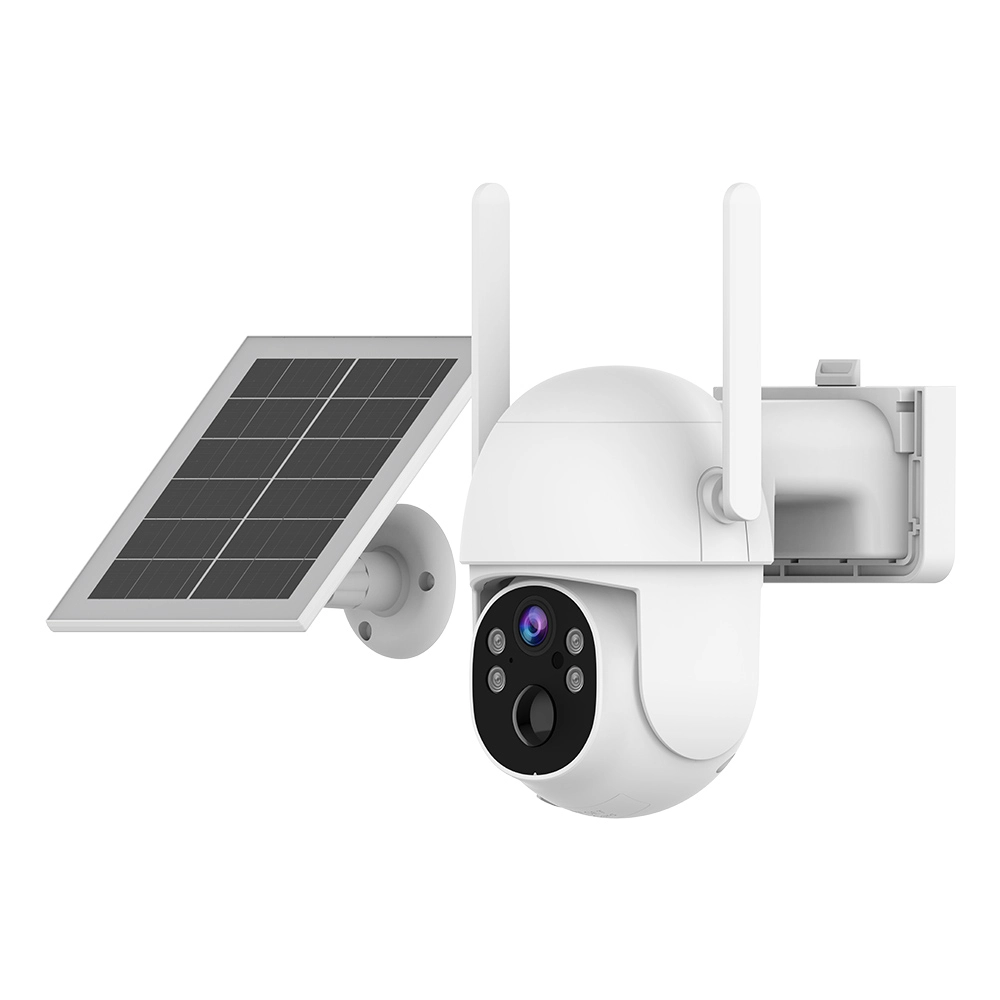
Experience unmatched security with Innotronik’s V-SIM Solar Camera-ITY-PT51-4MP. This 4G solar security camera offers seamless remote monitoring, easy installation, and eco-friendly power, ensuring reliable surveillance anywhere with crystal-clear 4MP video quality.
✦ 0-10m 120° PIR long-range standby trigger for faster startup
✦ 6000 mAh battery with 1-month standby (30 times/day)
✦ Automatic full-color alarm recording
✦ 4MP true pixels and a high-resolution lens for premium imaging
✦ 15m dual-light night vision for clear vision, even in the dark
✦ Supports human motion detection and accurate app alarm push
✦ Two-way real-time voice intercom for communication anytime, anywhere
✦ 128GB TF card storage for recording even without an internet connection; cloud storage for more secure recordings
✦ IP65 waterproof and dustproof for wind and rain resistance
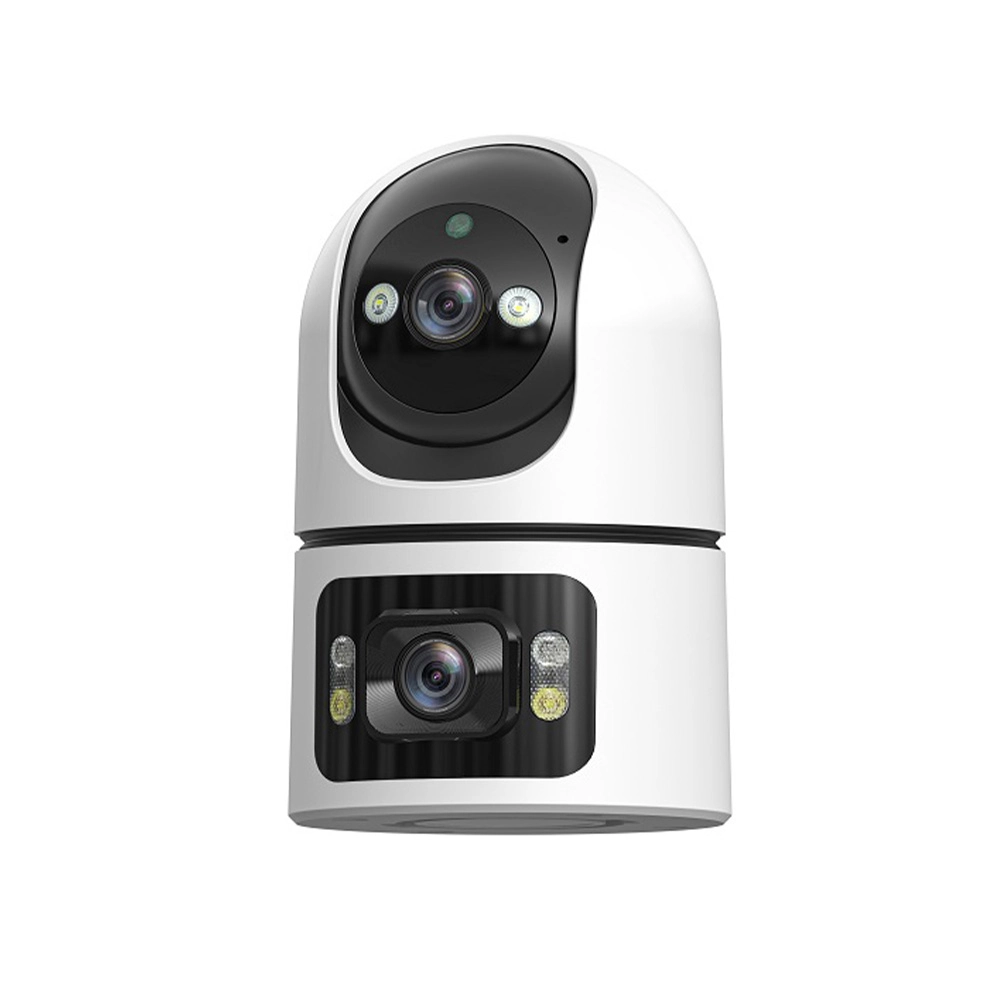
Innotronik’s Wifi Camera Indoor-ITY-PT30 (4MP) delivers clear 4MP video for secure indoor monitoring. This reliable indoor camera features easy Wi-Fi setup, motion detection, and night vision—perfect for home or office security. Enhance safety with Innotronik’s advanced indoor camera solution.
✦ 4MP Dual-Lens: High-resolution dual-lens system for superior image clarity.
✦ 360° PTZ View: 355° horizontal and 70° vertical rotation for full coverage.
✦ Dual Night Vision: 10 m range with infrared and full-color modes (12 LEDs).
✦ Tuya Smart App: Seamless integration for remote control and IoT management.
✦ Two-Way Audio: Built-in mic and speaker for real-time remote communication.
✦ Smart AI Alerts: Motion detection with instant mobile push and screenshots.
✦ H.265 Storage: Efficient compression supporting up to 128GB MicroSD and Cloud.
✦ Multi-User Share: Supports family sharing for up to 20 users simultaneously.
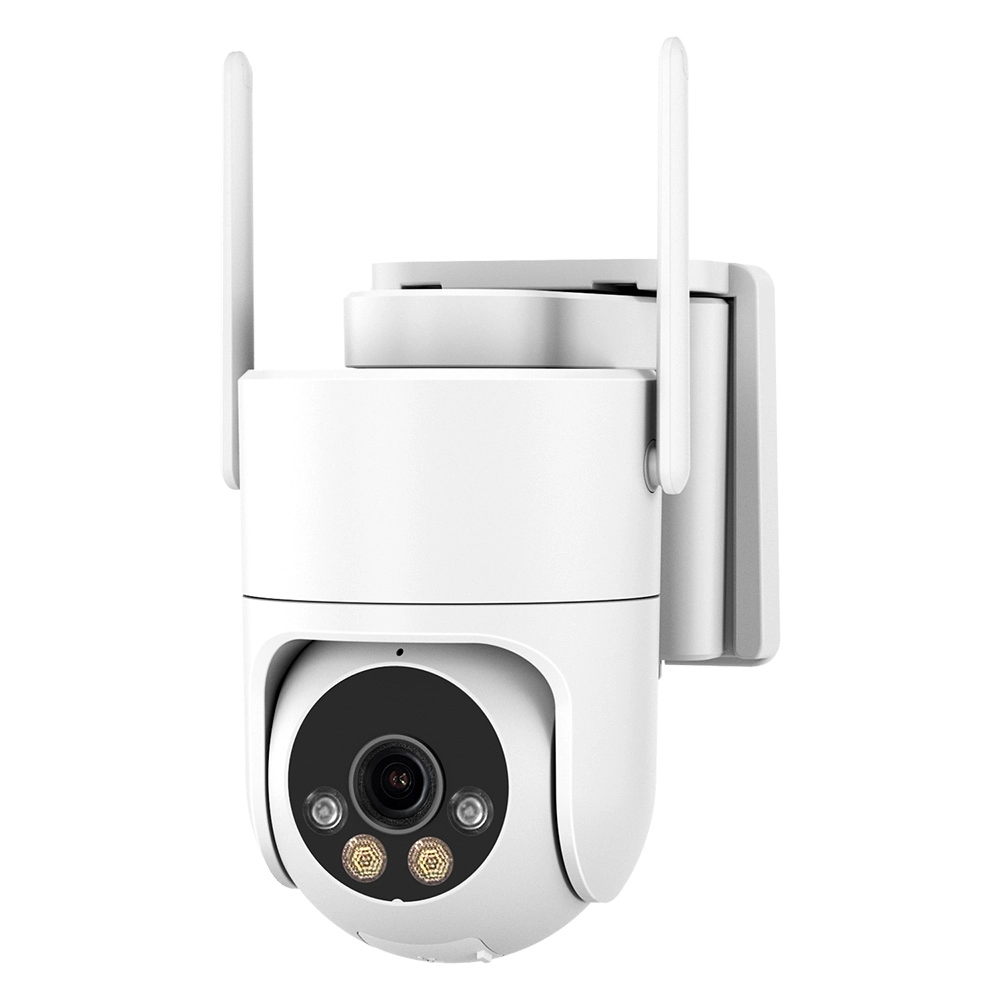
The Innotronik AOV Camera ICH-PT66-3MP delivers crisp, high-resolution 3MP imaging for advanced surveillance. Designed for reliable performance in diverse environments, this AOV camera ensures clear visuals and seamless monitoring. Ideal for comprehensive security solutions.
-
✦ 3MP AOV Camera for clear, low-power surveillance
-
✦ Smart human detection with adaptive frame rate
-
✦ 320° pan / 90° tilt wide-area coverage
-
✦ Battery & solar powered for long-term outdoor use
-
✦ IP66 waterproof with day & night monitoring
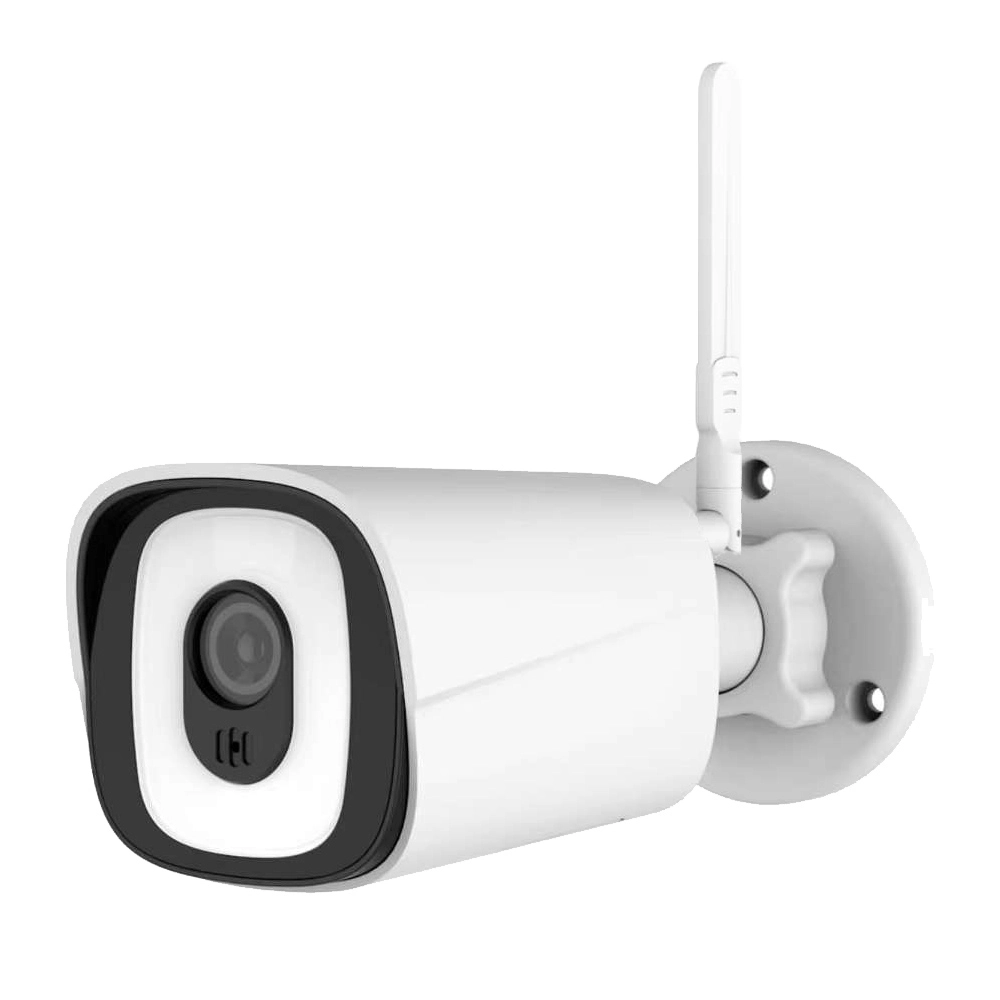
Innotronik’s Wifi Camera Outdoor-ITY-B11 (6MP) delivers high-resolution 6MP video for clear, reliable outdoor surveillance. Easy WiFi setup ensures seamless monitoring, making it ideal for home and business security. Durable design withstands all weather conditions for 24/7 protection.
✦ 6MP ultra HD video
✦ 3 night vision modes (smart/IR/color)
✦Two-way audio
✦ Dual-band WiFi + Bluetooth
✦Human/motion detection with alerts
✦ 24/7 recording (128GB local + cloud)
✦ Tuya Smart app control
✦IP66 Weatherproof (-30°C to +60°C)

Get a Free Quote
Let's Talk.
Reach out to discuss OEM & ODM options, request a quote, or start your project with our expert team.



Aelen Tran
Innotronik Manager
Leave a message
Contact us


First Floor, 99-1 Donghuan Road, Zhucun, Tianhe District, Guangzhou City, Guangdong Province, China.
© 2026 Innotronik. All Rights Reserved.